
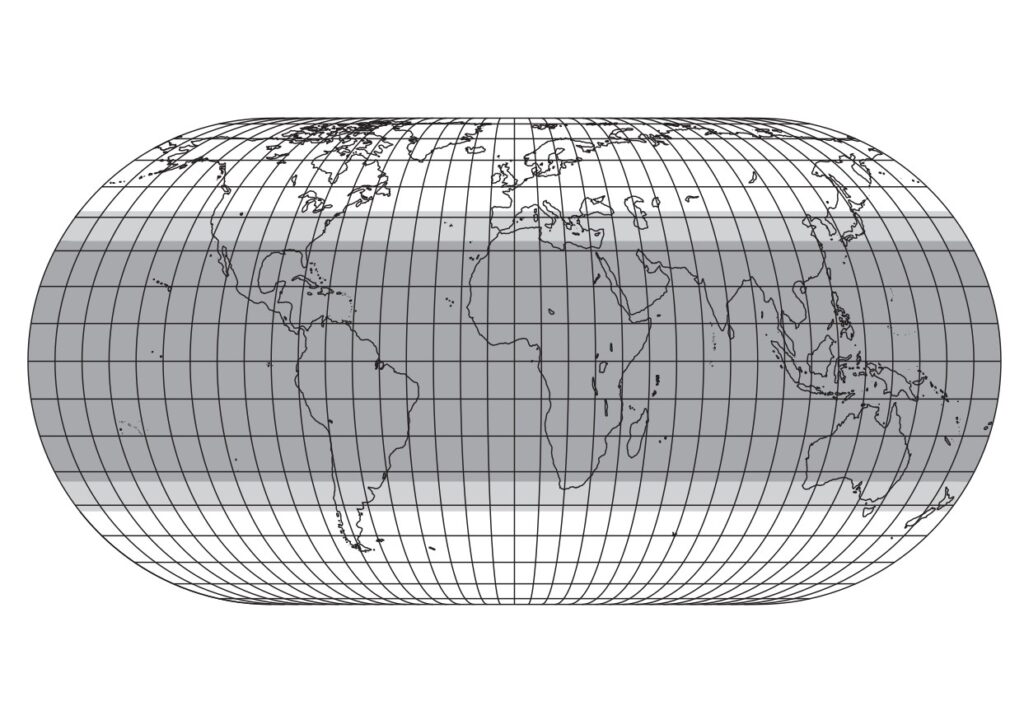
One of the targets set in the United Nation’s 2030 Agenda for Sustainable Development is the reduction of premature deaths from non-communicable diseases. The aim is to reduce them by one-third by 2030. This ambitious initiative has come in response to a growing burden of chronic disease in low- and middle-income countries. Many of them are undergoing rapid transitions in economic growth and in the built environment. Their populations are adopting the living and working habits of more affluent societies located at higher latitudes. Once these changes begin health problems common away from the Equator, such as cardiovascular disease, cancer and diabetes become more problematic.
Research over many years has shown such conditions to be complex. But one thing that they share is a relationship with daylight or, rather, a lack of it. There is already evidence that latitude may be key to understanding where and how infectious diseases spread. A greater appreciation of this might improve our chances of preventing both infectious and chronic conditions. The aim of this project is examine their relationship with latitude and daylight.
Dr Richard Hobday, Independent researcher, UK
Prof. Brian Norton, TU Dublin & Tyndall National Institute, Ireland
Prof. Brian Norton: brian.@TUDublin.ie