
Overview
Despite the growing recognition of the importance of daylight for human health, wellbeing and environmental quality, access to this resource remains disproportionate and inequitable. Daylight conditions vary widely due to a broad set of structural and socio-cultural factors. Rapid urban densification, limited regulatory oversight, economic constraints, climate characteristics, evolving housing typologies, changing work patterns and increasing technological dependence all influence the extent to which daylight reaches living, learning and working environments.
These layers of complexity shape how daylight is used, obstructed, valued or overlooked in everyday life. They give rise to multiple challenges, including insufficient daylight in interior spaces, restricted sky views, overreliance on electric lighting and environments that do not support circadian health. As a result, daylight becomes unevenly distributed, with some groups benefiting from greater access and others experiencing scarcity or compromised conditions, reinforcing broader social and environmental disparities.
Objective and Method
This project aims to conceptualize and contextualize the ‘Right to Daylight’ across diverse social, cultural, political and climatic settings. We seek to examine how factors such as housing policies, public health frameworks, legal regulations, cultural habits of living, economic constraints and local conditions shape access to daylight.
Our vision is to promote equitable access to daylight as a fundamental right for human health and wellbeing. To achieve this, we will identify key stakeholders, existing gaps, barriers and opportunities, and define minimum conditions and incentives for implementation in different regions.
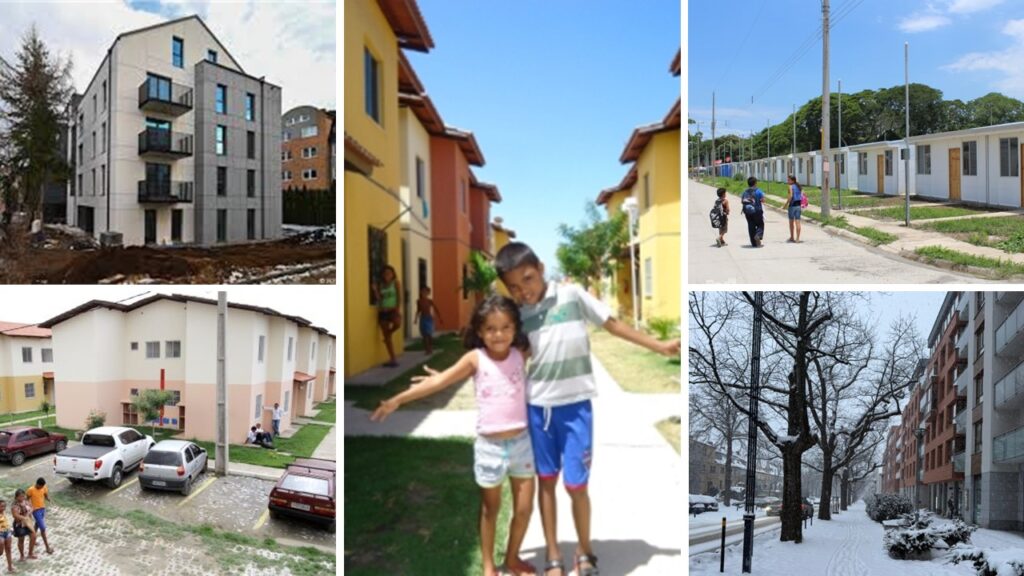
Case studies from contrasting context (e.g. tropical x temperate, Global South x North) will serve as diagnostic examples. Through them, we will develop a shared analytical framework to compare and interpret daylight-related parameters in architecture, urbanism, public space and policy.
The project relates with the following Sustainable Development Goals (SDGs): 3 – Good health and wellbeing; 9 – Industry, innovation and infrastructure; 10 – Reduced inequalities; 11- Sustainable cities and communities and 13 – Climate action.
Prof. Claudia Naves David Amorim (Lead) Faculty of Architecture and Urbanism, University of Brasília, Brazil
Associate Prof. Andrea Sancho-Salas (Co-lead) Faculty of Engineering, School of Architecture, University of Costa Rica
Dr Natalia Sokol (Co-lead) Gdansk University of Technology, Poland
Dr Aicha Diakite-Kortlever, TU Berlin, Germany
Amanda Moura Pinheiro, Faculty of Architecture and Urbanism, University of Brasília, Brazil
Arlind Dervishaj, KTH Royal Institute of Technology, Stockholm, Sweden
Dr K. David Harrison, Swarthmore College (USA) and VinUniversity, Hanoi, Vietnam
Débora Barroggi Constantino, University of Surrey, UK
Fernanda S. Bonatto, Federal University of Rio Grande do Sul, Brazil
Filomena Russo, University of Cambridge, GB
Isabela Jefferson, Faculty of Architecture and Urbanism, University of Brasília, Brazil
Dr Lenka Maierová, Czech Technical University, Prague
Dr Luca Zaniboni, Technical University of Denmark, Denmark
Ass. Prof. Natalia Giraldo Vasquez, Technical University of Denmark, Denmark
Prof. Noureddine Zemmouri, University of Biskra, Algeria